

Many of us have heard of the New York City Waterfalls project; however, I was curious to see it for myself and observe those visiting the falls since I'd heard mixed reviews regarding the project. From some I heard fantastic things regarding the projects' ability to bring vitality and life to the New York City waterfront, which until recently, has been somewhat neglected and underutilized. However, from others I'd heard criticism regarding the falls' "unappealing structure" as each waterfall is built from a very basic construction material found all over New York City: scaffolding.


After visiting each of the falls myself and viewing them from opposite sides of the East River (which in actuality is a straight, not a river), I have to strongly disagree with the naysayers. A little bit of research and careful observation might help these individuals appreciate the waterfalls for what they are - interesting pieces of public art built to inspire and intrigue. In regards to the structure of the falls, the scaffolding represents the backbone of what has been used to build New York for the last one hundred years. They are a testament to the city itself and should be viewed as such. As a landscape architecture student (and naturally an advocate), I had the distinct pleasure of pointing out these details to some of the people who previously regarded the waterfalls as ugly. To my surprise, those that had made these claims had yet to visit the falls but had only heard about them! How rewarding it was to show them images from my visit and have them become suddenly excited to visit for themselves.
Whatever your personal opinion of the falls, one visit to any of the four quickly tells you a great deal. From teenage couples sitting on benches, observing the falls, to joggers running along the "river's" edge; for many the falls are an interesting addition to the city's landscape and they make the New York waterfront far more interesting than it has been in the past. It's my sincere hope that projects like these continue, bringing excitement and interest to a city that sometimes needs just a little help in showing its beauty.
The New York City Waterfalls by artist Olafur Eliasson are comprised of four man-made falls ranging in height from 90 - 120 feet tall and are situated along the shorelines of Lower Manhattan, Brooklyn, and Governor's Island. The project is an example of temporary public art, commissioned by the non-profit organization Public Art Fund. For some information regarding Olafur Eliasson and the New York City Waterfalls, visit http://www.nycwaterfalls.org/.
-Olivia Alicea


 City Farm is an urban farming initiative by an environmental non-profit in Chicago known as The Resource Center. Its goal is to provide local jobs and affordable, healthy produce for disadvantaged residents. It currently straddles Cabrini Green (a notorious area for failed public housing initiatives, although a new, much improved project opened adjacent to City Farm)and the Gold Coast (one of Chicago's elite neighborhoods). Ongoing gentrification will likely push it out of the community to another vacant lot somewhere, but it is booming right now and receives volunteer labor from all over the city. People willingly give up sat. mornings to help grow food in the city. I bought a cucumber, garlic and some peppers during my visit, and they were delicious and cheap. More info can be learned at


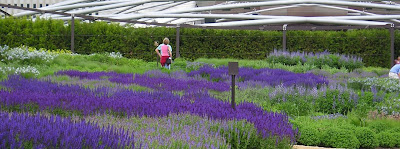


 More images will follow of other parts of the city, but I definitely think these images ask us as landscape architects what we can do to involve other disciplines in our work to design spaces that are not only beautiful works of art, but backdrops to the daily lives of people. Not only can it create richer, layered public spaces, but it also holds a potential to revitalize urban areas into vibrant communities. Thoughts?


 Posts
Posts

